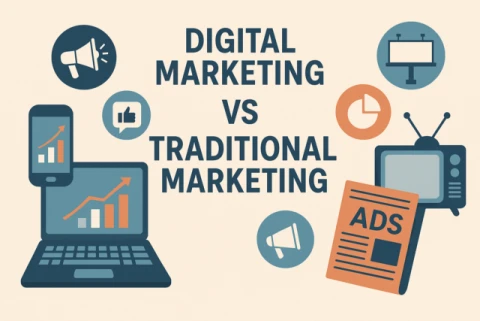
The debate between digital marketing and traditional marketing is one I’ve come across time and again throughout my career. Both methods have their strengths, and both can be effective in different contexts. But when you work in the world of data as I do, with a passion for understanding consumer behaviour and using that insight to help businesses grow, you start to see clear differences in how these approaches deliver results.
As a data analyst and marketer, my focus has always been on making informed decisions based on evidence. I thrive in environments where there is a high volume of information to interpret, and I enjoy the challenge of finding patterns that lead to real business outcomes. So when it comes to comparing digital marketing and traditional marketing, my view is shaped not by opinion alone, but by measurable experience.
What Is Traditional Marketing?
Traditional marketing refers to methods that have been used for decades. These include television and radio advertising, newspaper and magazine ads, printed brochures, billboards, direct mail, and face-to-face networking. These channels can be incredibly powerful, especially for brand awareness, local exposure, and reaching demographics that are less active online.
To see how these channels gave way to online ones, read our guide on how traditional marketing evolved into digital marketing.
I have worked with businesses that saw great success through local newspaper features and radio promotions. There is something to be said for the credibility and familiarity that comes from traditional media. For some audiences, especially older generations or those in rural areas, these channels remain trusted sources of information.
But from a data perspective, traditional marketing presents some challenges. Tracking return on investment is often more difficult. You can make estimations, run follow-up surveys, or use unique discount codes, but you are rarely able to measure impact in real-time. This makes it harder to optimise campaigns on the go or make agile decisions based on consumer response.
What Is Digital Marketing?
Digital marketing includes a wide range of online tactics. These can involve paid advertising through platforms like Google Ads or Facebook, search engine optimisation (SEO), email marketing, content creation, video marketing, influencer partnerships, social media campaigns, and more.
What sets digital marketing apart, in my opinion, is the ability to work with real-time data. Every click, every view, every conversion can be tracked. I can see which channels are working, where drop-offs occur, and how different segments of an audience respond to different messages. This makes it possible to adjust campaigns instantly for better performance.
Digital marketing is not just about being visible online. It’s about using insight to connect with the right people at the right time. I’ve seen campaigns succeed not because they had huge budgets, but because they were targeted, relevant, and continually refined using actual user behaviour.
Data Is the Game Changer
The biggest advantage digital marketing offers me as a data analyst is access to continuous data. Whether I’m running a paid search campaign or creating content for SEO, I can gather a constant stream of information that helps shape the next step. This level of responsiveness just is not possible with traditional methods.
I’ve worked on projects where we tested different ad copy versions, monitored the click-through rates, adjusted the landing page layouts, and watched conversion rates shift in real-time. This kind of experimentation and immediate feedback is only possible in the digital space. It allows for smarter decisions, more efficient spend, and ultimately better results.
Understanding Consumer Behaviour
One of my core interests has always been consumer behaviour. Why do people make certain choices? What persuades someone to click a button, pick up the phone, or complete a purchase? These are questions I never stop asking.
Traditional marketing can certainly influence consumer behaviour, especially in terms of perception and trust. A television advert or billboard can help establish brand familiarity. But the insights into behaviour are largely surface-level.
Digital marketing, on the other hand, opens the door to deep behavioural tracking. I can see how users navigate a website, which parts of a page they spend the most time on, what types of content they engage with, and even what time of day we are most active. These insights are crucial in building effective strategies and tailoring marketing to suit specific audience needs.
The Role of Cost and Reach
From a budgeting perspective, digital marketing typically offers better value for money, particularly for small to medium businesses. Traditional marketing campaigns often come with high upfront costs, and once we are launched, there is little room for adjustment. A printed brochure or a radio slot is not something you can edit after distribution.
With digital marketing, I can set modest budgets, test campaigns, and scale up what works. If an advert is underperforming, I can pause it immediately. If a blog post is gaining traction, I can boost it further. That level of control is incredibly powerful.
Reach is another consideration. Traditional media may reach a broad but less targeted audience, whereas digital allows for precise targeting based on interests, behaviours, locations, and more. I’ve helped businesses reach highly specific customer groups using advanced digital targeting tools, something that simply isn’t feasible through print or broadcast.
When Traditional Marketing Still Wins
Despite my clear preference for digital marketing, I do believe traditional methods still have a place. In-person events, printed materials, and local advertising can complement online efforts. A well-designed flyer, for example, can drive people to a website where the real conversion happens.
Some industries, such as luxury goods, real estate, or healthcare, may benefit from the perceived prestige or trustworthiness of traditional media. And for large-scale brand-building, television and outdoor advertising can still create a big impact.
The key, in my view, is to ensure that all marketing channels are connected. If someone sees a poster or hears a radio ad, there should be a clear digital follow-up path. Whether that is a website visit, a QR code, or a social media presence, the journey should feel seamless.
A Combined Approach Is Often Best
The most effective marketing strategies I’ve been part of do not rely on a single method. Instead, they combine the broad reach and emotional appeal of traditional marketing with the data-rich, adaptable power of digital.
For instance, a business might launch a print campaign supported by online remarketing. Or use direct mail to promote a time-limited offer, with a digital landing page that captures leads and tracks engagement. This kind of integration creates multiple touchpoints and improves overall performance.
Final Thoughts From the Analyst’s Desk
From where I sit, immersed in data, trends, and behaviour patterns every day, digital marketing is by far the more versatile, measurable, and scalable solution. It allows for detailed audience insights, targeted communication, and ongoing optimisation — all essential for modern business growth.
Traditional marketing, while limited in its data output, still plays a role in brand recognition and trust-building, especially for certain audiences and industries. But in today’s fast-paced, digitally connected world, businesses that ignore digital are simply leaving too much potential on the table.
My advice to any business is to stop thinking in terms of one or the other. Instead, build a strategy that plays to the strengths of both. Use traditional media to build presence and digital platforms to drive engagement, gather insight, and convert attention into action.
That’s what real, results-driven marketing looks like.
There is a newer version of this comparison worth reading too – not digital against traditional, but human against automated. Our article on whether digital marketing will be replaced by AI works through where the line currently sits.