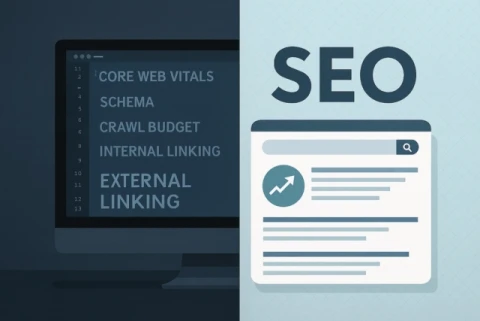
An SEO web developer is not just someone who can add meta titles after a site has been built. The useful work happens earlier: deciding how pages are structured, how content is loaded, how navigation can be crawled, how redirects are handled and how performance is protected while the website still looks and feels right for visitors.
That is why SEO and web development should be planned together. A business website can have strong design and still struggle in search if Google cannot easily crawl the important pages, render the content, understand the hierarchy or follow the path from a guide to a service page.
SEO vs Web Developer: What’s the Difference?
They are not rivals; they solve different halves of the same problem. Here is who does what:
| SEO specialist | Web developer | |
|---|---|---|
| Main focus | Getting the right pages found, understood and clicked in search | Building a site that works, loads fast and is easy to maintain |
| Typical tasks | Keyword and intent research, content, metadata, internal linking, Search Console analysis | Templates, page structure, hosting, JavaScript, performance, redirects |
| Cares most about | Rankings, clicks and enquiries | Clean, fast, reliable code |
| Where they overlap | Technical SEO: crawlability, rendering, Core Web Vitals, canonicals, redirects, schema and site structure – the build decisions that make or break search | |
Do you need both? Usually, yes – but they have to work together, not one after the other. The costly mistakes happen when a site is built first and SEO is bolted on afterwards. An SEO-focused developer, or a developer and SEO who plan together, closes that gap.
What Makes a Web Developer ‘SEO-Focused’?
An SEO-focused developer thinks about search before the site goes live. That does not mean forcing keywords into every heading. It means building the technical foundations that let useful pages be discovered, understood and measured.
Here’s what I typically focus on:
- Crawlability: Important pages should be linked, reachable and not accidentally blocked by robots rules, broken links or fragile navigation.
- Rendering: Key content should be available in a way search engines can process, including when JavaScript is part of the build.
- Semantic HTML: Headings, lists, buttons, links, images and page regions should describe the content clearly.
- Internal linking: Service pages, guides and proof pages should support each other naturally rather than sitting in separate silos.
- Core Web Vitals: Layout stability, responsiveness and loading performance should be protected as part of the build, not treated as decoration afterwards.
Why Technical SEO and Development Shouldn’t Be Separate
Separating technical SEO from development usually creates rework. The developer builds the site, the SEO review finds crawl or template issues, and then everyone has to decide whether to patch the live website or rebuild parts of the structure.
Planning web development and SEO together keeps the important questions close to the build:
- Can search engines find the important URLs?
- Can they render the same primary content a user sees?
- Do pages have clear titles, headings, canonicals and internal links?
- Will a redesign preserve useful URLs, redirects and search demand?
- Can analytics and Search Console data be used after launch to spot issues?
Common problems include missing metadata, JavaScript that hides important content until too late, duplicate template pages, weak canonical logic, image-heavy layouts with no performance plan, redirect chains from old URLs and service pages that are not linked clearly from guides or case studies.
Real example?
A common rebuild issue is duplicate or near-duplicate URLs from categories, filters, tags, staging content or CMS templates. The fix is rarely just rewriting a title. It may involve noindex decisions, canonical tags, redirect logic, internal-link changes, sitemap cleanup and better content ownership so each useful page has a distinct job.
SEO Web Developer Skills That Actually Matter
A good SEO web developer does not need to replace an SEO strategist or content specialist. They do need to understand how development choices affect crawlability, indexation, performance, measurement and conversion paths.
Here’s the skillset I think makes the difference:
- Semantic HTML: meaningful headings, lists, links, image alt text and page landmarks so users and crawlers can understand the page.
- Performance optimisation: lean templates, images handled properly, no unnecessary scripts, and Core Web Vitals checked before launch. Our Core Web Vitals guide explains the performance signals in more detail.
- Structured data: schema added only where it matches visible page content, such as articles, breadcrumbs, services, organisation details or genuine FAQs.
- Redirect and canonical logic: a clear plan for old, duplicate and retired URLs during redesigns or CMS changes, so search engines do not waste time on the wrong pages.
- Content awareness: developers do not write every sentence, but they should know which page owns which intent, where headings matter and how templates support readable content.
- Measurement: Search Console, analytics and conversion tracking built into the handover, so technical issues and enquiry paths can be checked after launch.
In short: strong SEO web development protects the design while making the site easier to crawl, understand, maintain and improve.
Advice for Clients: How to Work With an SEO Web Developer
If you are planning a new website, a redesign or a technical SEO cleanup, ask practical questions before the build starts. You do not need to become a developer, but you do need to know whether search has been considered properly.
- Ask how the site will keep important content crawlable and indexable.
- Ask how JavaScript, menus, filters, tabs and lazy-loaded content will be handled.
- Ask what happens to old URLs during a redesign.
- Ask whether titles, descriptions, headings, schema and image alt text are reviewed before launch.
- Ask how Core Web Vitals, sitemap output, Search Console and analytics will be checked after launch.
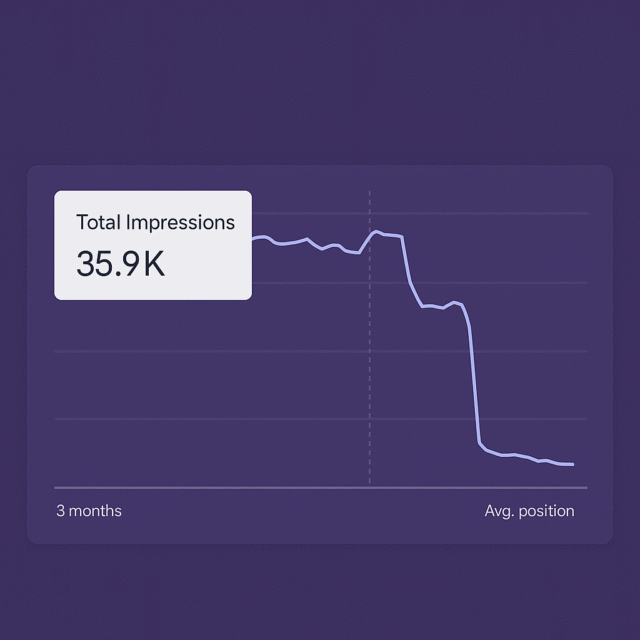
Those questions are especially important if you are moving platform, changing URL structure, replacing a theme, rebuilding a WordPress site, adding ecommerce, or trying to recover from a drop in search visibility.
So Where Does This Leave You?
If you are a business owner or marketer, the practical takeaway is simple: web development and SEO should not be competing workstreams. They should inform each other. A good site needs to be fast, accessible, useful, crawlable and structured around the pages customers actually need.
Corsto’s SEO and web development support can help with technical SEO reviews, Search Console evidence, service-page structure, Core Web Vitals, content ownership and safer rebuild planning. If the website itself needs rebuilding, our responsive website design services can keep SEO foundations in the project from the start.